Showing posts with label Archives. Show all posts

Saturday, 21 February 2015

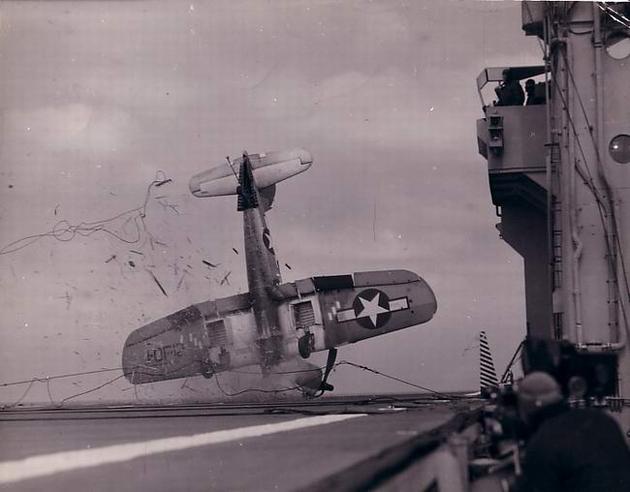
Vought F4U Corsair crashes on the deck of a carrier when the arresting gear failed


The Chance Vought F4U Corsair was an American fighter aircraft that saw service primarily in World War II and the Korean War. Demand for the aircraft soon overwhelmed Vought's manufacturing capability, resulting in production by Goodyear and Brewster: Goodyear-built Corsairs were designated FG and Brewster-built aircraft F3A. From the first prototype delivery to the U.S. Navy in 1940, to final delivery in 1953 to the French, 12,571 F4U Corsairs were manufactured by Vought, in 16 separate models, in the longest production run of any piston-engined fighter in U.S. history (1942–53)

Wednesday, 18 February 2015

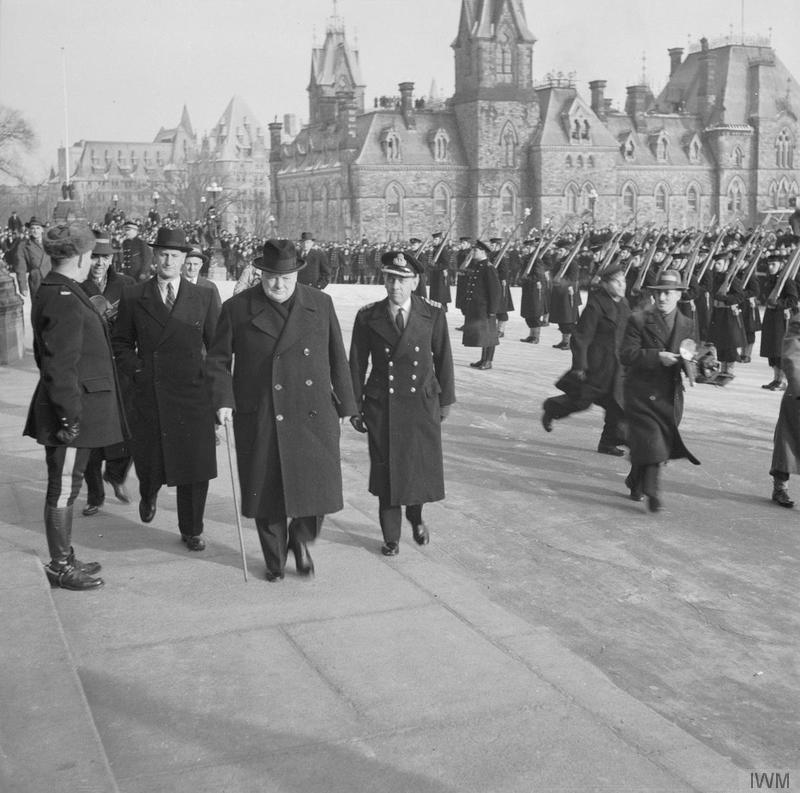
Winston Churchill arrives outside the Canadian Houses of Parliament in Ottawa, Canada, 1941


Embedded image permalink


Sir Winston Leonard Spencer-Churchill, KG, OM, CH, TD, DL, FRS, RA (30 November 1874 – 24 January 1965) was a British politician who was the Prime Minister of the United Kingdom from 1940 to 1945 and again from 1951 to 1955. Widely regarded as one of the greatest wartime leaders of the 20th century, Churchill was also an officer in the British Army, a historian, a writer (as Winston S. Churchill), and an artist. He won the Nobel Prize in Literature, and was the first person to be made an honorary citizen of the United States.
Churchill was born into the aristocratic family of the Dukes of Marlborough, a branch of the Spencer family. His father, Lord Randolph Churchill, was a charismatic politician who served as Chancellor of the Exchequer; his mother, Jennie Jerome, was an American socialite. As a young army officer, he saw action in British India, the Sudan, and the Second Boer War. He gained fame as a war correspondent and wrote books about his campaigns.
At the forefront of politics for fifty years, he held many political and cabinet positions. Before the First World War, he served as President of the Board of Trade, Home Secretary, and First Lord of the Admiralty as part of Asquith's Liberal government. During the war, he continued as First Lord of the Admiralty until the disastrous Gallipoli Campaign caused his departure from government. He then briefly resumed active army service on the Western Front as commander of the 6th Battalion of the Royal Scots Fusiliers. He returned to government as Minister of Munitions, Secretary of State for War, and Secretary of State for Air. In 1921–1922 Churchill served as Secretary of State for the Colonies, then Chancellor of the Exchequer in Baldwin's Conservative government of 1924–1929, 


controversially returning the pound sterling in 1925 to the gold standard at its pre-war parity, a move widely seen as creating deflationary pressure on the UK economy. Also controversial were his opposition to increased home rule for India and his resistance to the 1936 abdication of Edward VIII.
Out of office and politically "in the wilderness" during the 1930s, Churchill took the lead in warning about Nazi Germany and in campaigning for rearmament. At the outbreak of the Second World War, he was again appointed First Lord of the Admiralty. Following the resignation of Neville Chamberlain on 10 May 1940, Churchill became Prime Minister. His steadfast refusal to consider surrender helped inspire British resistance, especially during the difficult early days of the war when the British Commonwealth and Empire stood alone in its active opposition to Adolf Hitler. Churchill was particularly noted for his speeches and radio broadcasts, which helped inspire the British people. He led Britain as Prime Minister until victory over Nazi Germany had been secured.
After the Conservative Party lost the 1945 election, he became Leader of the Opposition to the Labour Government. After winning the 1951 election, he again became Prime Minister, before retiring in 1955. Upon his death, Elizabeth II granted him the honour of a state funeral, which saw one of the largest assemblies of world statesmen in history. Named the Greatest Briton of all time in a 2002 poll, Churchill is widely regarded as being among the most influential people in British history, consistently ranking well in opinion polls of Prime Ministers of the United Kingdom.
Sunday, 15 February 2015

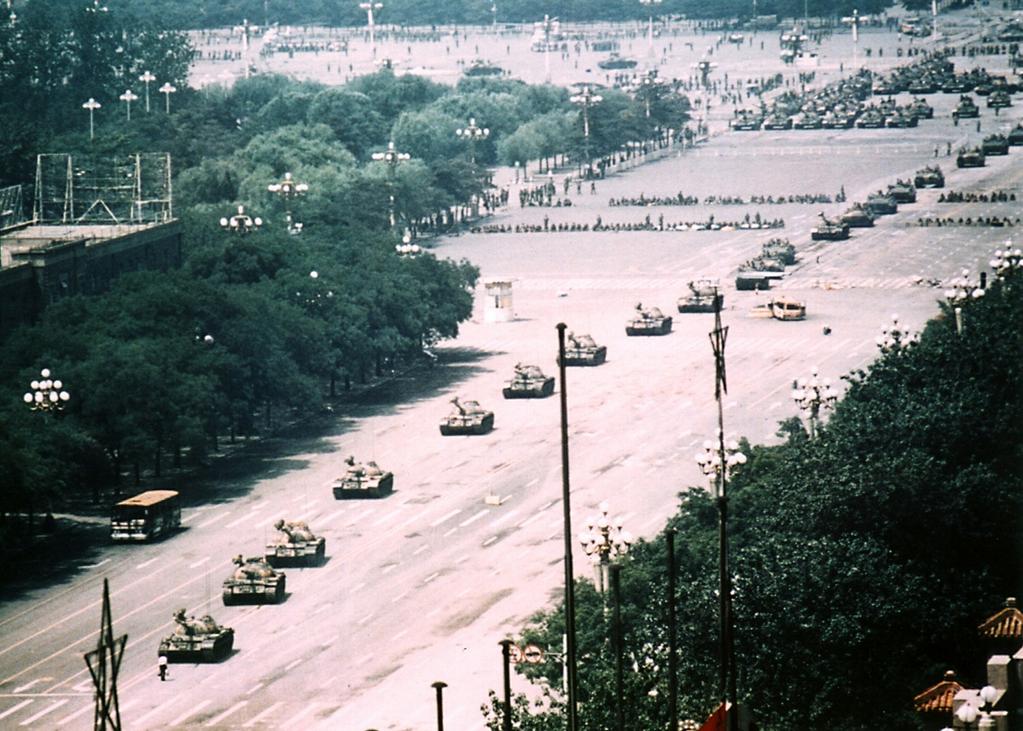
The bigger picture of the tank man on Tienanmen square, 1989


A man who stood in front of a column of tanks on June 5, 1989, the morning after the Chinese military had suppressed the Tiananmen Square protests of 1989 by force, became known as the Tank Man or Unknown Protester. The tanks maneuvered to pass by the man, and he moved to continue to obstruct them, in something like a dance. The incident was filmed and seen worldwide.
Currently, there is no reliable information about the identity or fate of the tank man.
 

Tuesday, 10 February 2015

The zeppelin being built


 A Zeppelin is a type of rigid airship named after the German Count Ferdinand von Zeppelin who pioneered rigid airship development at the beginning of the 20th century. Zeppelin's ideas were first formulated in 1874 and developed in detail in 1893. They were patented in Germany in 1895 and in the United States in 1899.After the outstanding success of the Zeppelin design, the word zeppelin came to be commonly used to refer to all rigid airships. Zeppelins were first flown commercially in 1910 by Deutsche Luftschiffahrts-AG (DELAG), the world's first airline in revenue service. By mid-1914, DELAG had carried over 10,000 fare-paying passengers on over 1,500 flights. During World War I the German military made extensive use of Zeppelins as bombers and scouts, killing over 500 people in bombing raids in Britain.

 Embedded image permalink

The defeat of Germany in 1918 temporarily slowed down the airship business. Although DELAG established a scheduled daily service between Berlin, Munich, and Friedrichshafen in 1919, the airships built for this service eventually had to be surrendered under the terms of the Treaty of Versailles, which also prohibited Germany from building large airships. An exception was made allowing the construction of one airship for the US Navy, which saved the company from extinction. In 1926 the restrictions on airship construction were lifted and with the aid of donations from the public work was started on the construction of LZ 127 Graf Zeppelin. This revived the company's fortunes, and during the 1930s the airships Graf Zeppelin and the larger LZ 129 Hindenburg operated regular transatlantic flights from Germany to North America and Brazil. The Art Deco spire of the Empire State Building was originally designed to serve as a mooring mast for Zeppelins and other airships, though it was found that high winds made this impossible, and the plan was abandoned. The Hindenburg disaster in 1937, along with political and economic issues, hastened the demise of the Zeppelins.

Wednesday, 28 January 2015

The Unique Burial Customs of Tana Toraja


The Toraja Tribe of South Sulawesi, Indonesia, is known for the cheerful way of treating death, and its unique burial grounds carved in sheer rock.
One of the most beautiful tourist destinations of Indonesia, the green hills of South Sulawesi are home to the Toraja, a tribe that still honors the old Austronesian lifestyle, similar to Nias culture. Most tribe members are Christians, converted during Dutch colonization, but traces of their old beliefs still remain and are most visible during funeral festivities and burial customs. The Toraja are obsessed with death, but not in a tragic sense; to them funerals are a lot like going-away parties celebrated by sacrificing dozens of buffaloes and pigs for a feast enjoyed by the entire community.
The main concern of a Toraja tribe member is to make sure he raises enough money so his family can throw the best party in town, when he leaves this world. Their bodies are stored under the family home for years after their death. During this time the remaining relatives refer to that person not as “the deceased” but as “the sick”, and raise money for the actual funeral, which is usually attended by hundreds of guests. Tourists are welcome to attend the festivities, as long as they don’t wear black or red.
Photo credits
While churches dot the Toraja countryside, tribe members are rarely buried in the ground. They are either placed in tombs dug into nearby cliffs, or in wooden coffins hanging on the side of mountains. Lemo, one of the most popular burial sites in the area, looks like a big piece of rock Swiss cheese, with holes carved to fit coffins and balconies for the “tau tau” – life-size wooden effigies representing the deceased. In the old days, effigies only showed the deceased’s gender, but now master carvers try to make them look like the actual person. After the body has been placed in its rock tomb, the dead’s effigy is placed along others, in a carved balcony, so his spirit can watch over his descendants. Unfortunately, so many tau tau effigies have been stolen to be sold to tourists that people have started to keep them in their house.
 
Photo credits
At Ke’te’ kesu’, the dead are not placed in cliff-dug graves, but in wooden caskets hanging from the side of cliffs. The coffins are beautifully decorated with geometrical shapes, but over time the wood begins to rot and the bleached bones of the deceased often exposed. Some Toraja members are so resourceful that they pack the bones of several family members into a single coffin, which eventually causes the sustaining poles to break under the weight. But, judging by the piles of wood and bones at the bottom of the suspended burial ground, this doesn’t seem to bother anyone.
 
Photo credits
The smallest of the Toraja burial grounds are the “Baby Trees” where the tribe’s young are placed. If a child dies before he has started teething, its mother wraps his body in cloth, makes a another hole in the Baby Tree and places the dead infant inside. The hole is then sealed and as the tree begins to heal, the child is believed to be absorbed.
Photo credits
As bizarre as these burial customs may seem to us, the Toraja regard them as a huge part of their tradition, and are struggling to keep them alive in a modern world.
 
Photo credits
 
Photo credits
 
Photo credits
 
Photo credits
 
Photo credits
Photo credits

The Unique Burial Customs of Tana Toraja was originally posted at Oddity Central